
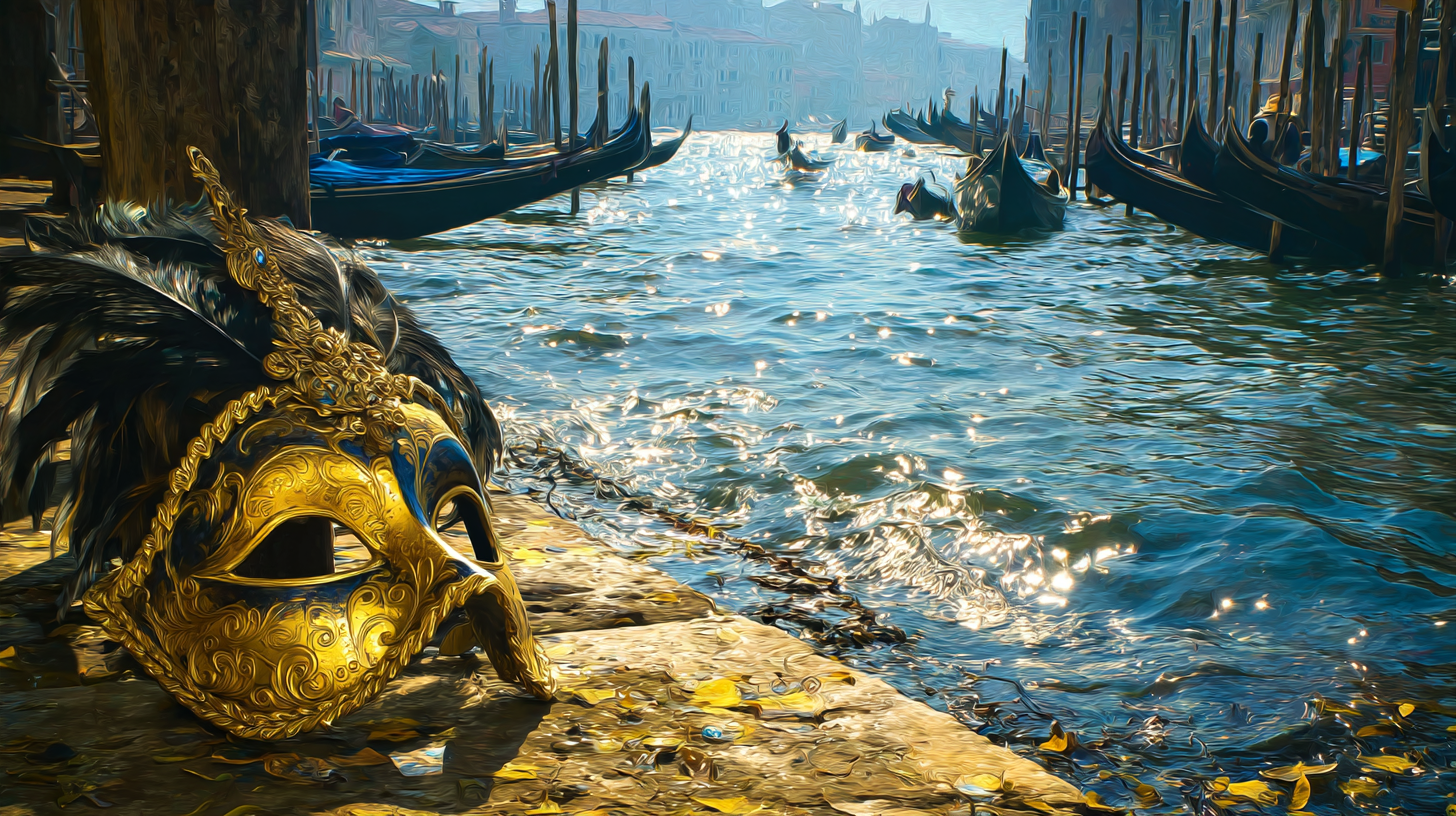
In Italy, Carnival isn’t just a party with masks and confetti: it’s a national mood.
A mix of history, street theatre, irresistible sweets, and local traditions that change from city to city.
If you’re learning Italian and exploring Italian culture, Carnival is one of the best times to observe
how Italians celebrate, joke, dress up—and, of course… how they eat.
Table of contents
What Carnival is in Italy (and why it matters)
Carnival is a popular celebration held in many Italian towns and cities between January and February,
reaching its peak in the days before Lent. It’s a time when rules loosen: costumes, playful jokes,
satire, street parades, and a general sense of “let’s enjoy life”.
Historically, Carnival was the last big feast before Lent, a period of restraint and reflection.
That’s why so many traditional foods are rich and fried—because, for a short time, indulgence was part of the tradition.
Language fun fact:
The word “Carnival” is often linked to the expression carne levare—literally “to remove meat”—
because Lent traditionally meant giving up certain foods.
The most famous Carnivals in Italy: where to go at least once
Every city has its own style. Some focus on elegance and tradition, others on giant parade floats and social satire,
while some are pure street energy. Here are a few of the most iconic ones.
- Venice Carnival: refined masks, historical costumes, and a unique theatrical atmosphere.
- Viareggio Carnival: huge, spectacular floats—often with bold political and social satire.
- Ivrea Carnival: famous for the dramatic “Battle of the Oranges”.
- Putignano Carnival: one of Europe’s oldest, deeply tied to local tradition.
- Ambrosian Carnival (Milan): lasts longer than most Italian Carnivals and ends a few days later.
Masks and costumes: a tradition that tells Italy’s story
Italy has traditional masks that represent characters from popular theatre. Many of them come from the
Commedia dell’Arte, an improvised theatrical tradition that influenced European culture for centuries.
Some masks are famous worldwide, while others are tied to specific regions—often playfully describing local stereotypes,
habits, or personality traits (with a lot of irony).
- Arlecchino (Harlequin): lively, clever, always finding a way out of trouble.
- Pulcinella: the iconic Neapolitan character, theatrical and sharp-tongued.
- Pantalone: the Venetian merchant, often portrayed as suspicious or stingy.
- Colombina: witty and smart—often the most resourceful person in the story.
- Il Dottore (Balanzone): from Bologna, talks a lot and loves sounding “very educated”.
Culture tip:
If you join Carnival in Italy, try wearing something connected to local tradition—even a simple mask.
It’s a fun way to feel part of the celebration and understand Italian culture better.
Typical Italian Carnival desserts (yes, Italy celebrates with food)
If there’s one thing that unites Italy during Carnival, it’s the sweets.
They’re often fried, fragrant, and dusted with sugar—short, intense pleasures that perfectly match the season.
- Chiacchiere: thin, crispy strips—also called bugie, frappe, cenci depending on the region.
- Castagnole: soft little dough balls, often coated in sugar (sometimes filled, too).
- Frittelle: especially popular in Venice, usually with raisins or custard.
- Sweet ravioli: fried and filled with ricotta, custard, or jam.
- Carnival doughnuts (tortelli): found in different versions across Italy.
A fun detail: the same dessert can have different names across Italy.
It’s a perfect (delicious) way to discover regional Italian vocabulary.
Practical tips to enjoy Carnival in Italy (especially if you’re a visitor)
If you’re in Italy during Carnival, don’t just watch—join in.
Even wearing a simple mask or tasting a traditional sweet can instantly pull you into the atmosphere.
- Check local dates: not every city celebrates on the same days.
- Dress comfortably: many events are outdoors and involve lots of walking.
- Taste the desserts: it’s one of the most authentic Carnival experiences.
- Learn a few useful words: coriandoli (confetti), maschera (mask), sfilata (parade), carro (float).
- Stay aware in crowded areas: as with any big event, keep an eye on your belongings.
Italian idioms and sayings connected to Carnival
Carnival has left traces in the Italian language too. Some expressions are still used today—and they often have a figurative meaning.
- A Carnevale ogni scherzo vale — “At Carnival, every joke is allowed.” (A classic saying.)
- Mettere la maschera — to hide your real feelings or intentions.
- Fare il pagliaccio — to act foolishly to get attention.
- Essere una maschera — to pretend, to play a role instead of being yourself.
- Sembra un Carnevale — used to describe a noisy, chaotic, crowded situation.
Phrase to remember:
“A Carnevale ogni scherzo vale” is one of the most famous Carnival sayings in Italian.
Use it at the right moment and you’ll sound instantly more natural.
Want to experience Italian culture through the language too?
Explore Italian traditions while learning real, useful Italian. If you’d like suggestions on how to study Italian effectively,
we’re happy to help.